
WILLIAM RUTHVEN SECONDARY COLLEGE
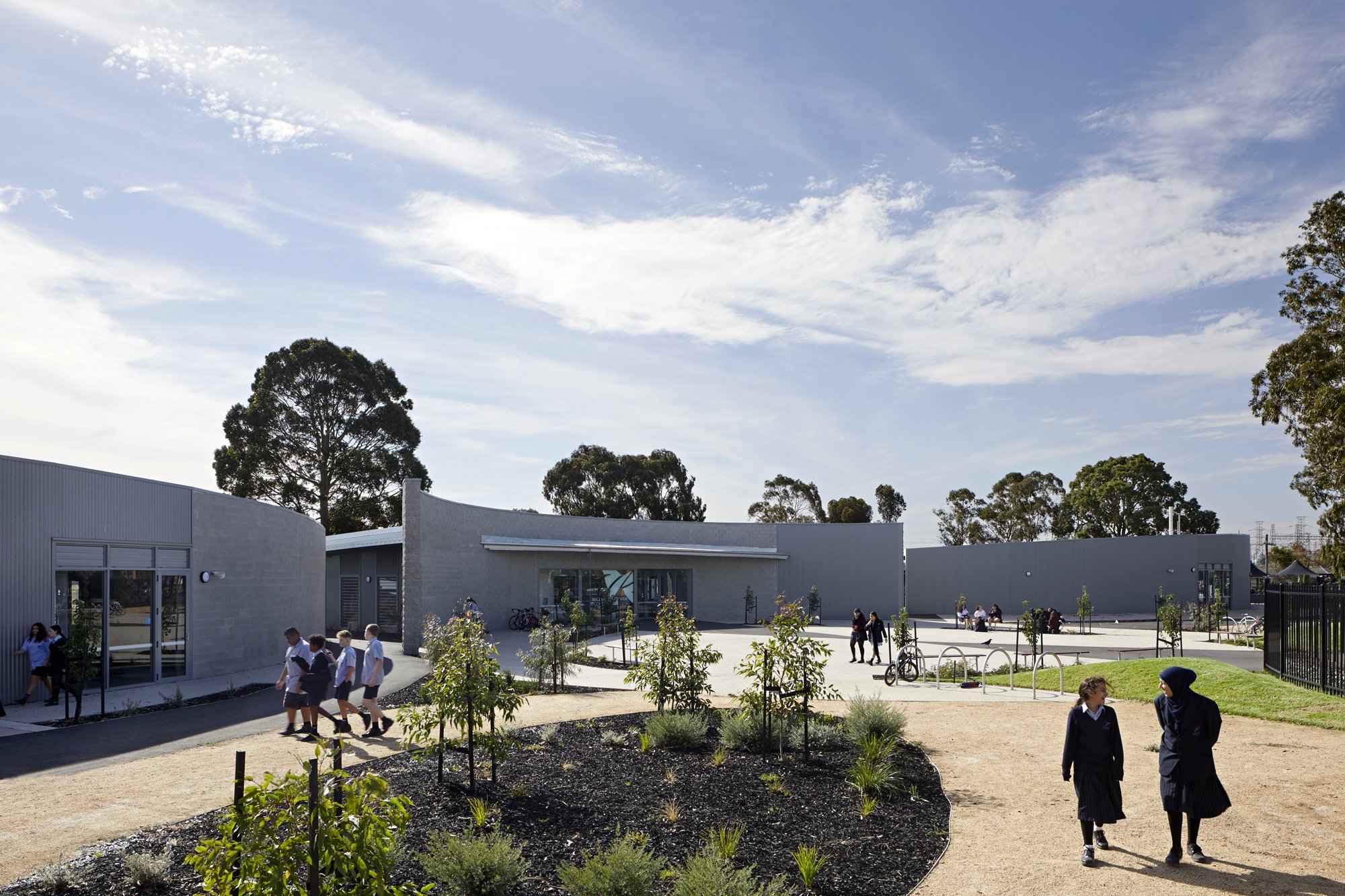
Under the guidance of forward-thinking leadership, this campus revitalisation was a key catalyst in the shift in culture and pedagogy at William Ruthven Secondary College, outwardly changing the public’s perception of the school and inwardly providing spaces that enable new teaching and learning experiences.
Client
Victorian School Building Authority
Project Type
Education/ Science & Creative Arts
Completed
2019
Traditional Owners
Wurundjeri people
Welcoming and connected spaces
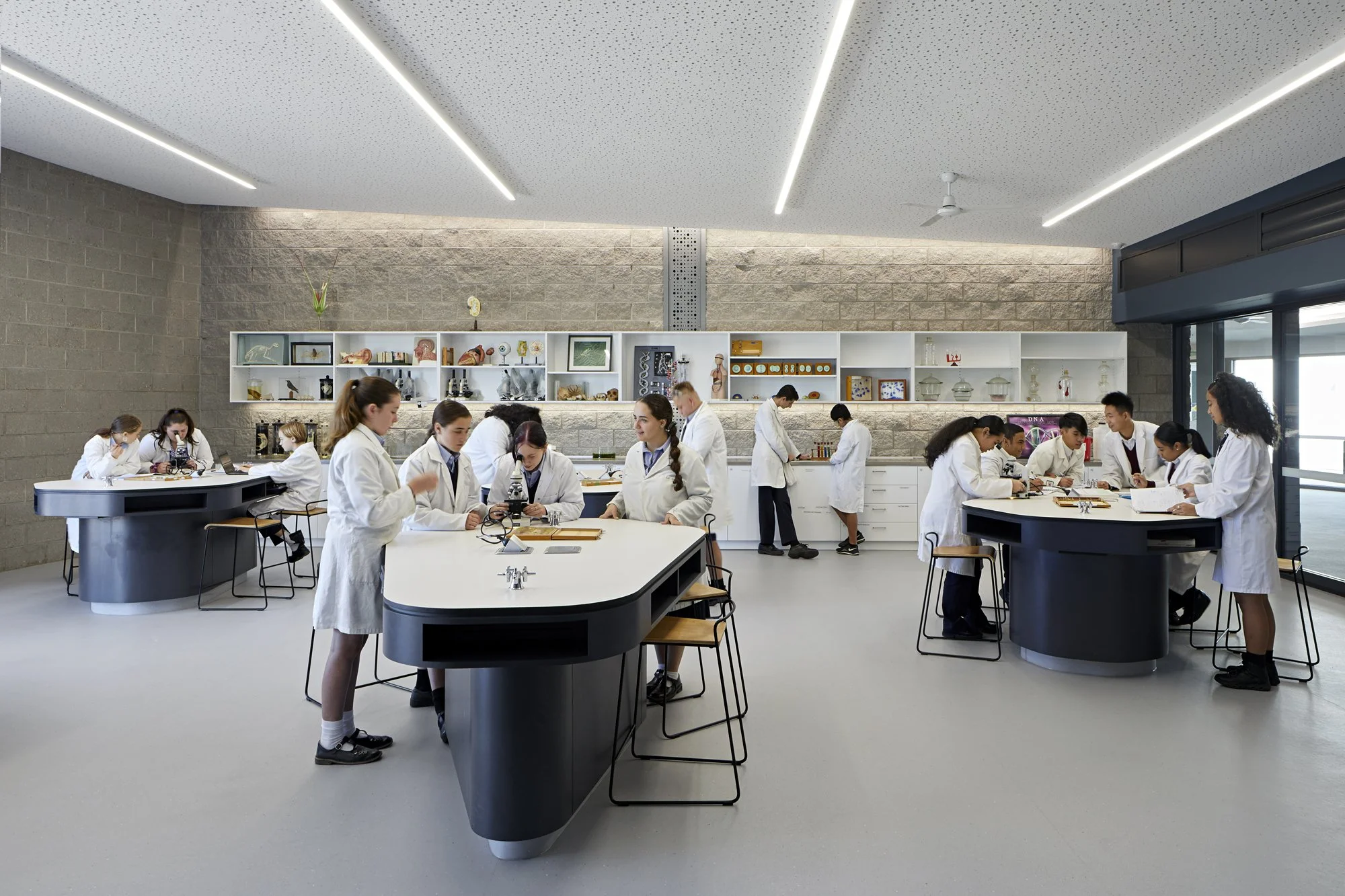
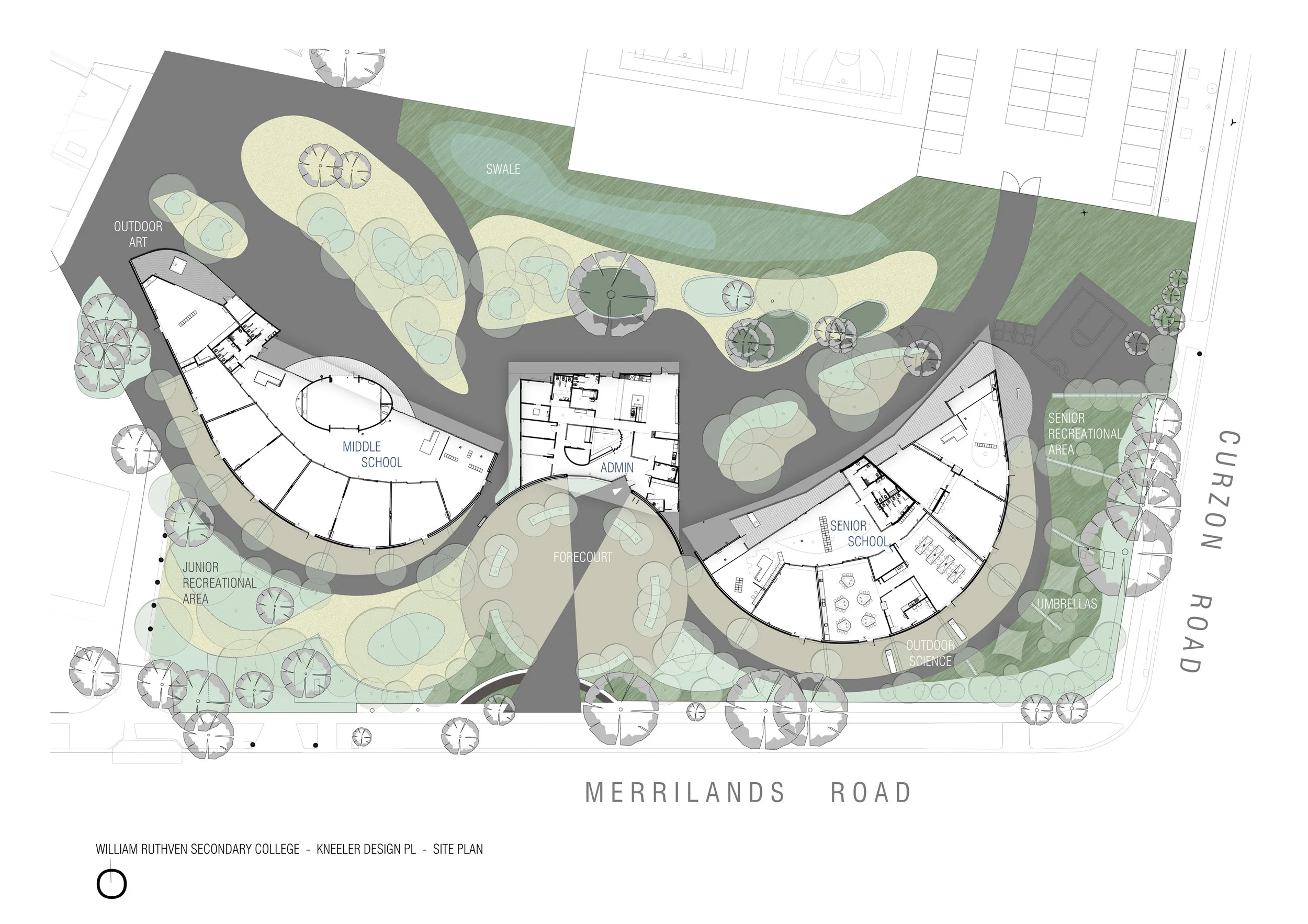
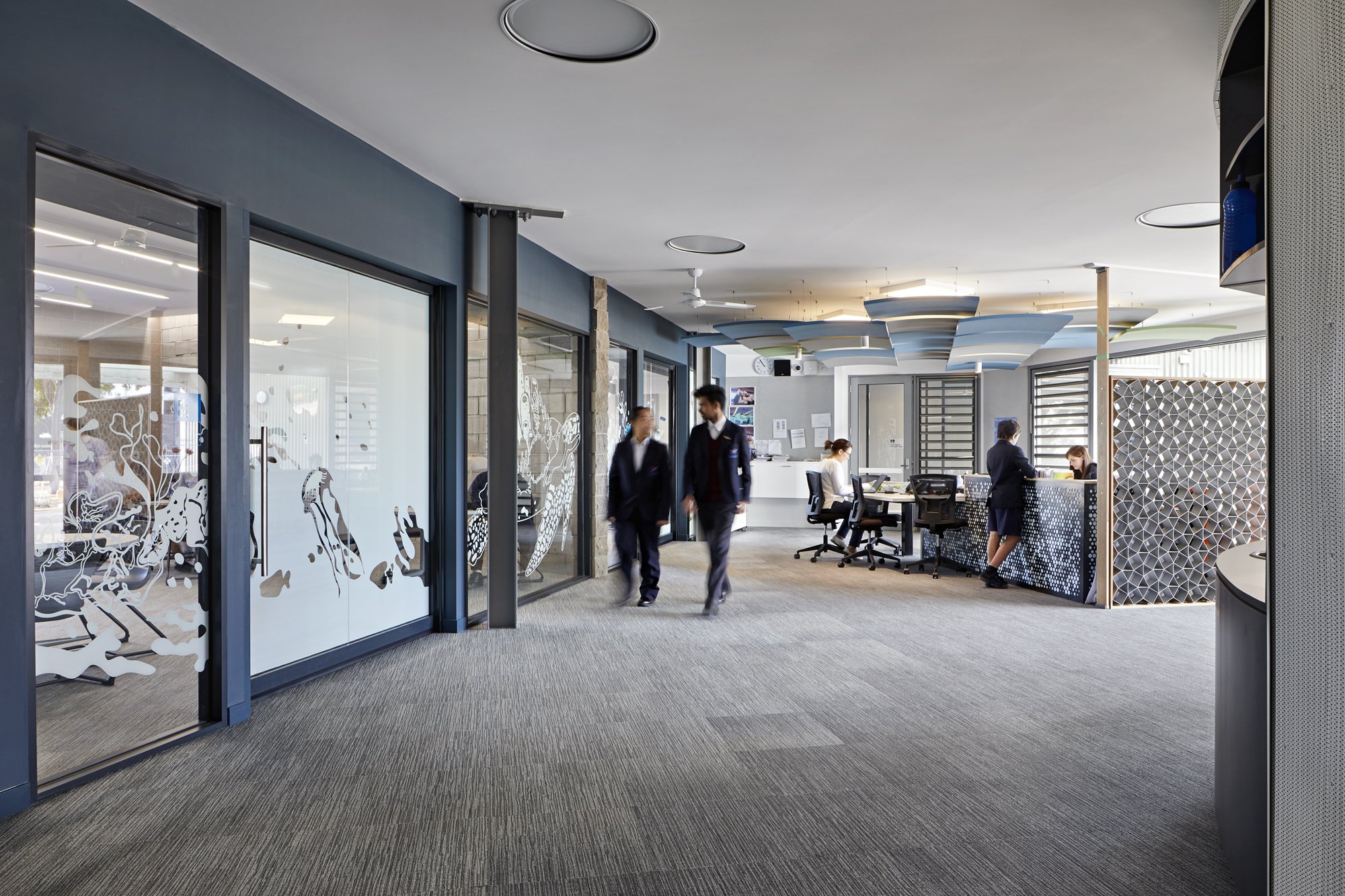
The students and their families at WRSC are from diverse backgrounds, so creating a welcoming space that allowed them to meet, gather, and linger was crucial. The sweeping crescent forms create a welcoming gesture that guides visitors to the waiting area in the administration building, an experience designed to be light-filled, bustling, and delightful. A fern garden greets visitors upon approach to the waiting area, while a forest of timber columns hedging the reception desk subtly references the surrounding trees. Full-height glazing encloses the conference room, providing a private space for sensitive discussions that remains visually connected to the rest of the building.
Exchanging ideas
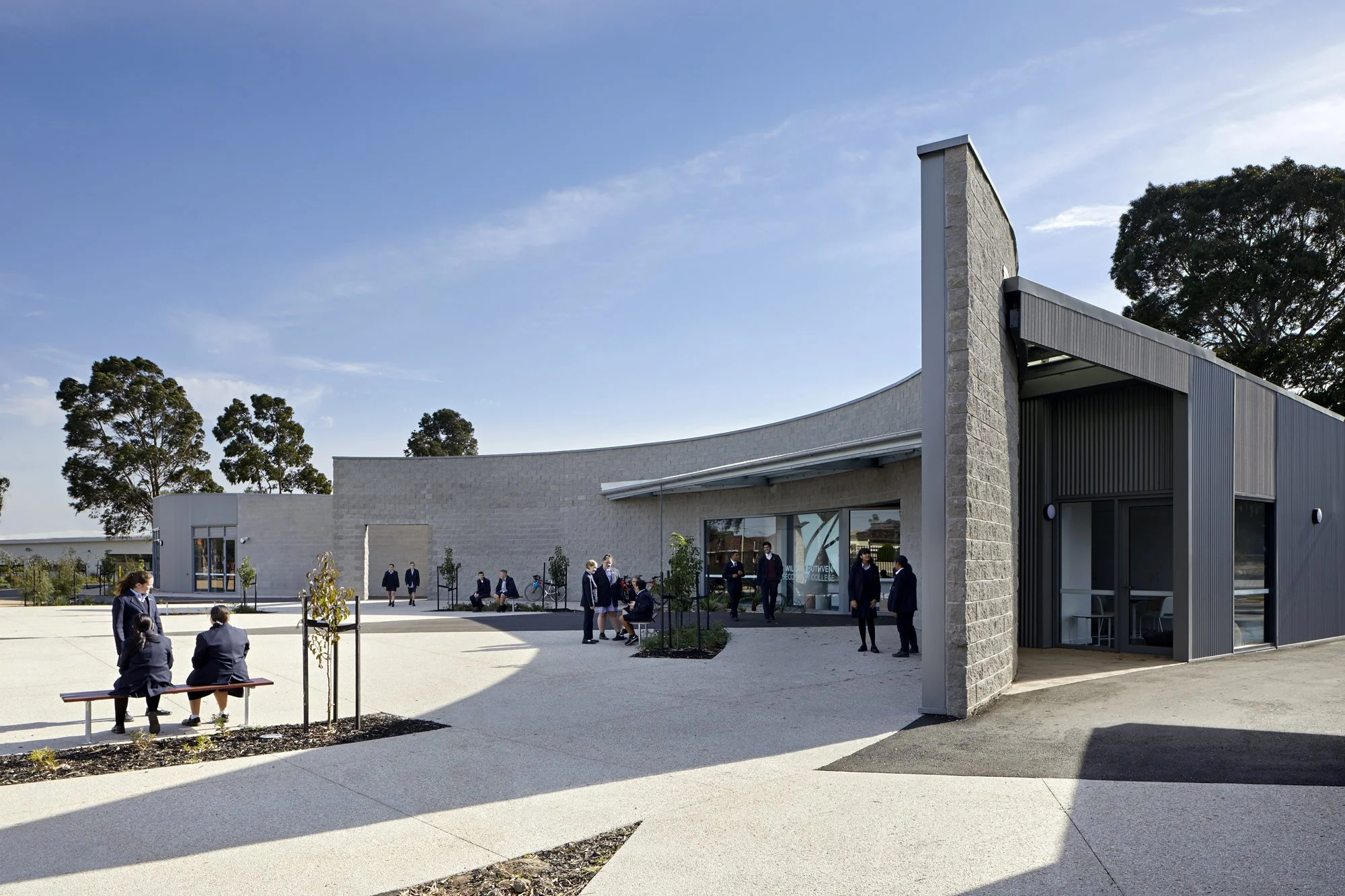
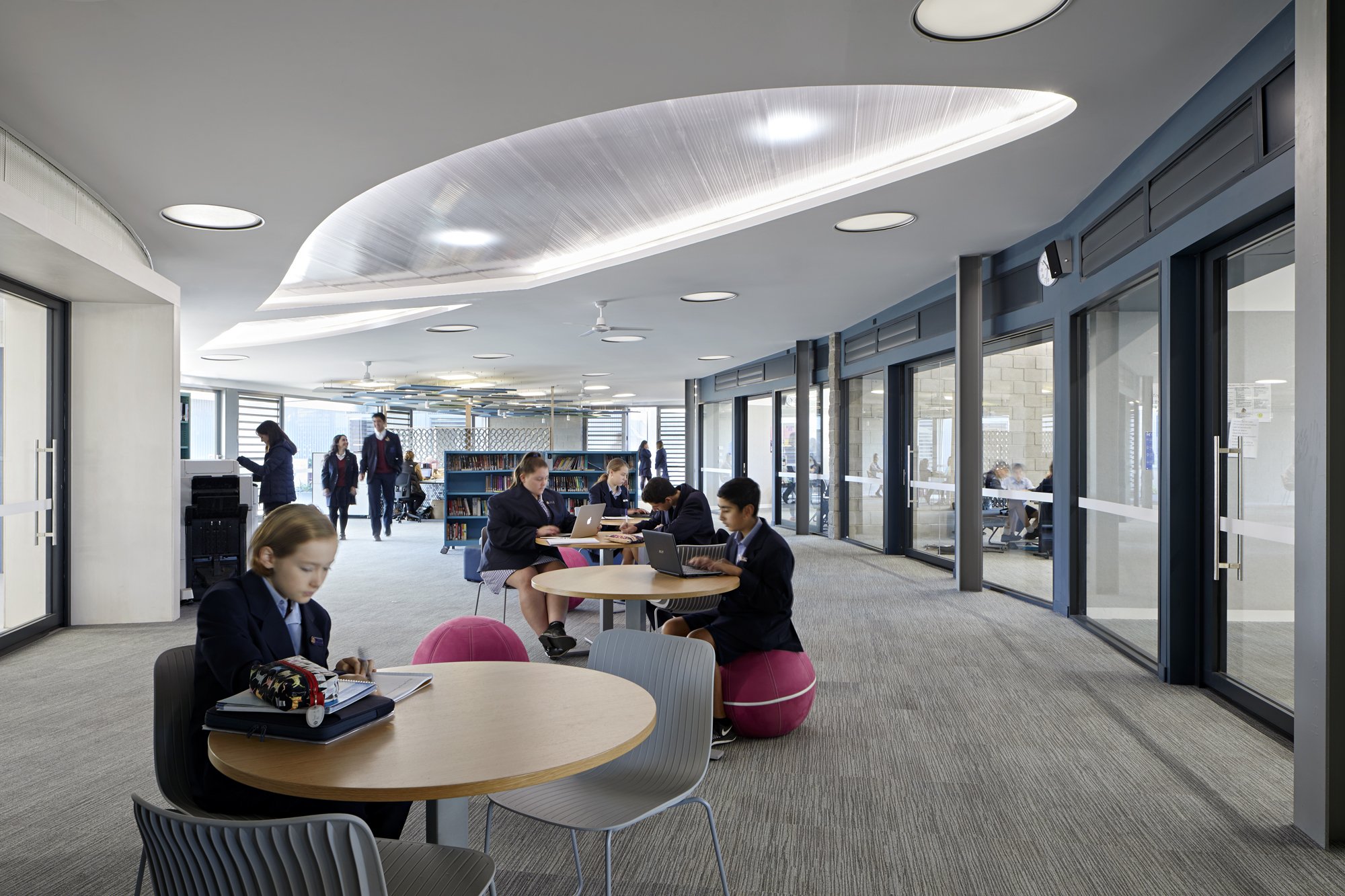
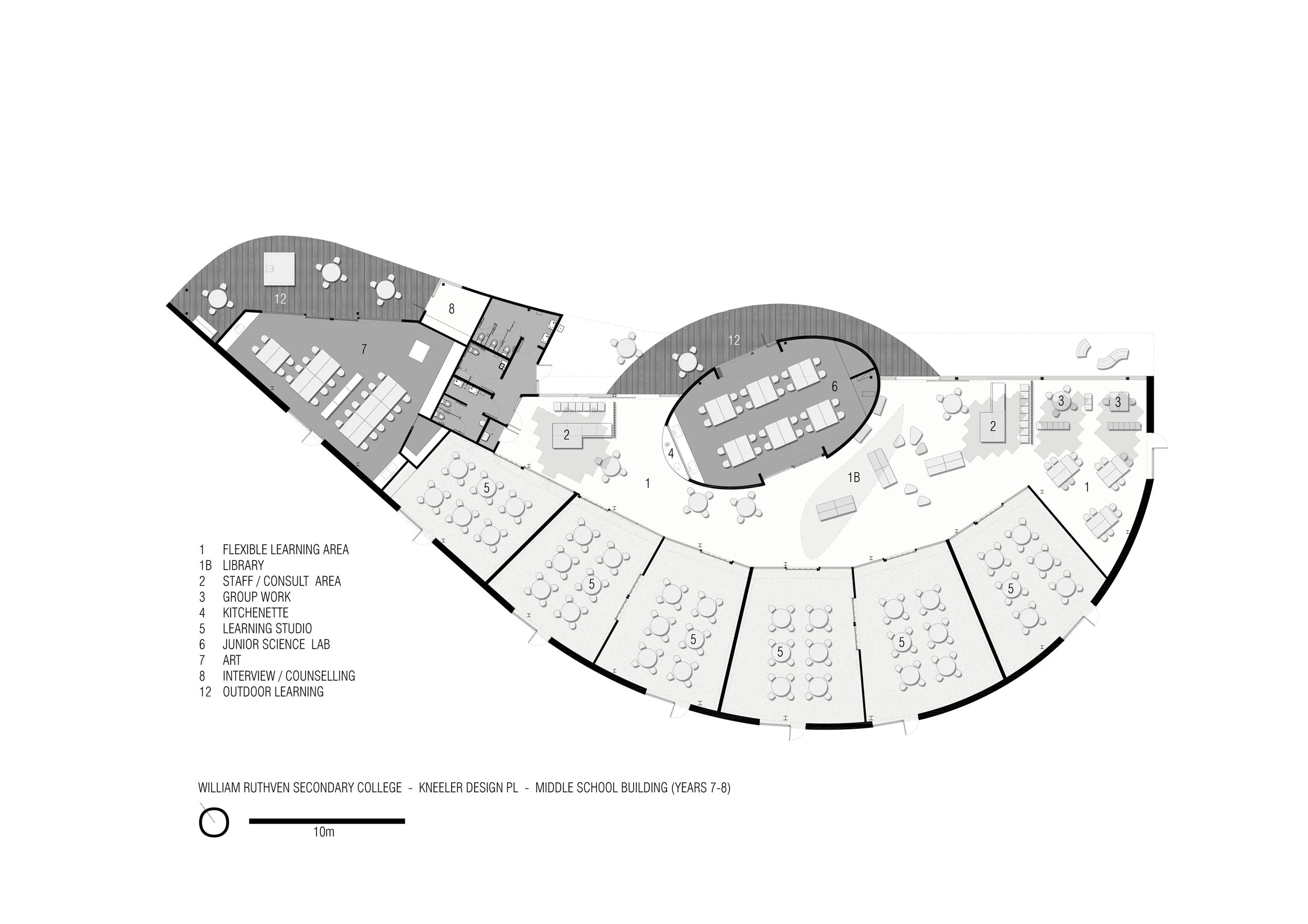
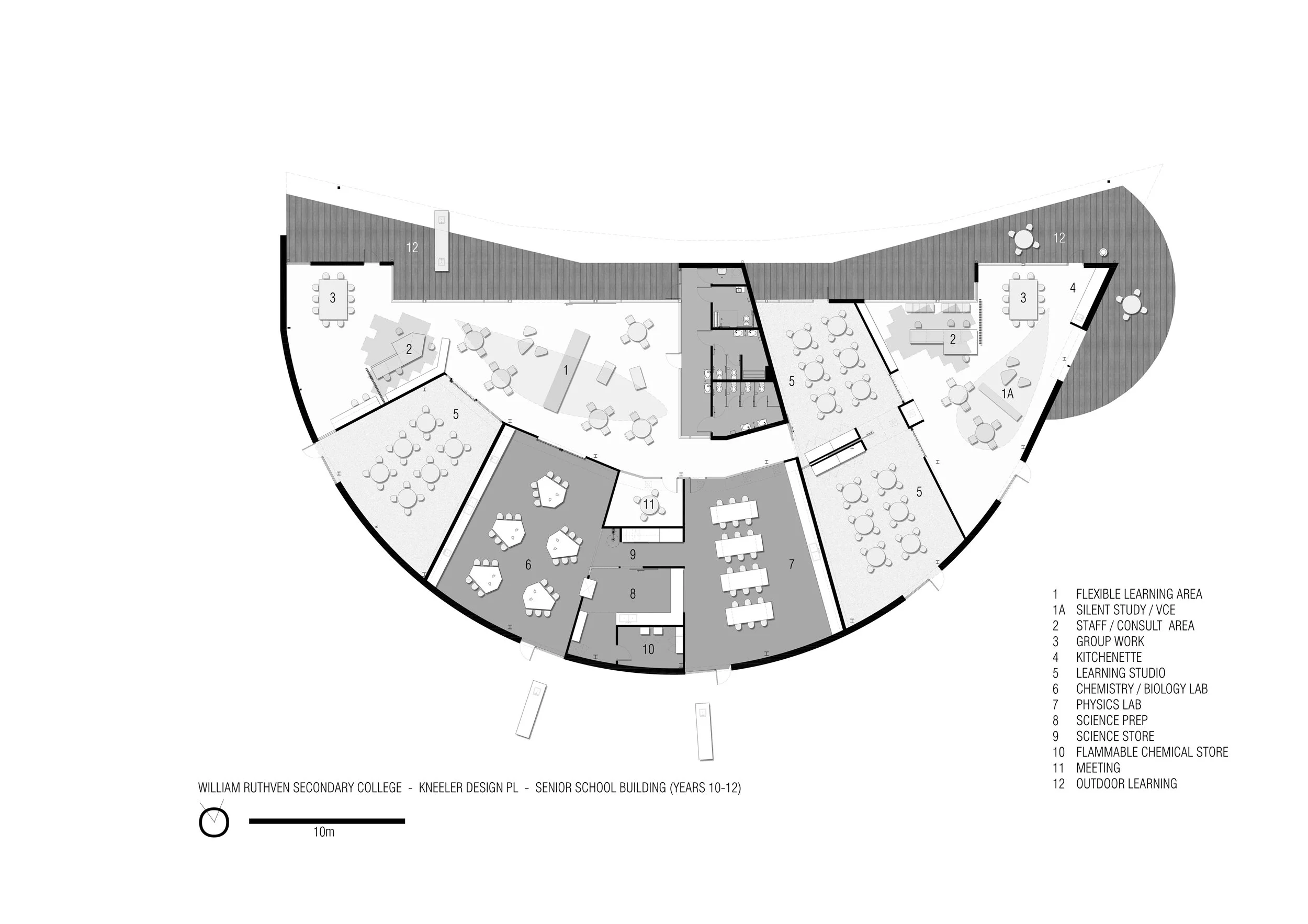
Learning and teaching is based on the principle that it is a relationship—a democratic act of exchange. This is reflected in every design decision that shaped the project. Round table settings furnish learning studios as classes are omni-directional. Every occupant can see beyond their workspace or to the outdoors, and can see and be seen in equal measure. Transparency between spaces allows light and information to flow. Teachers and students alike can learn from their peers, whether directly or through osmosis. The exit is always visible, giving the spaces a sense of enclosure without confinement.
Equity, equality & inclusivity
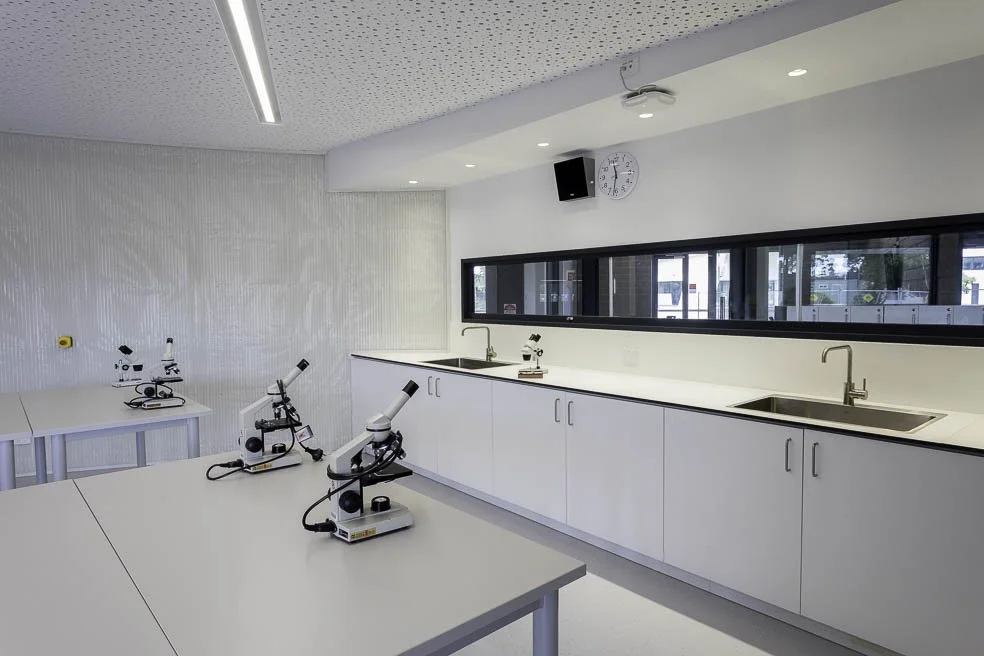
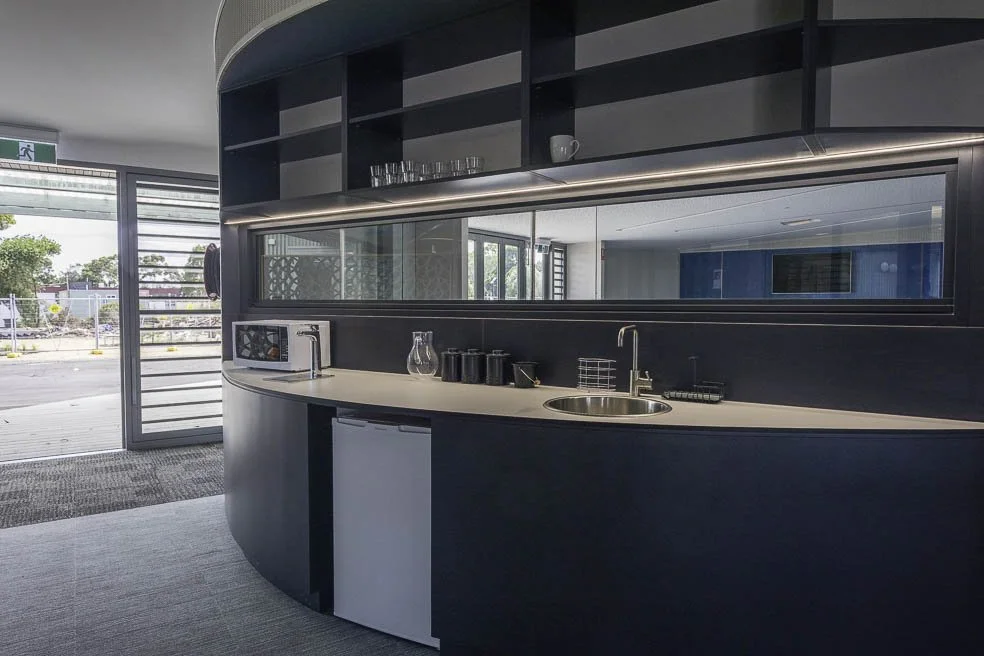
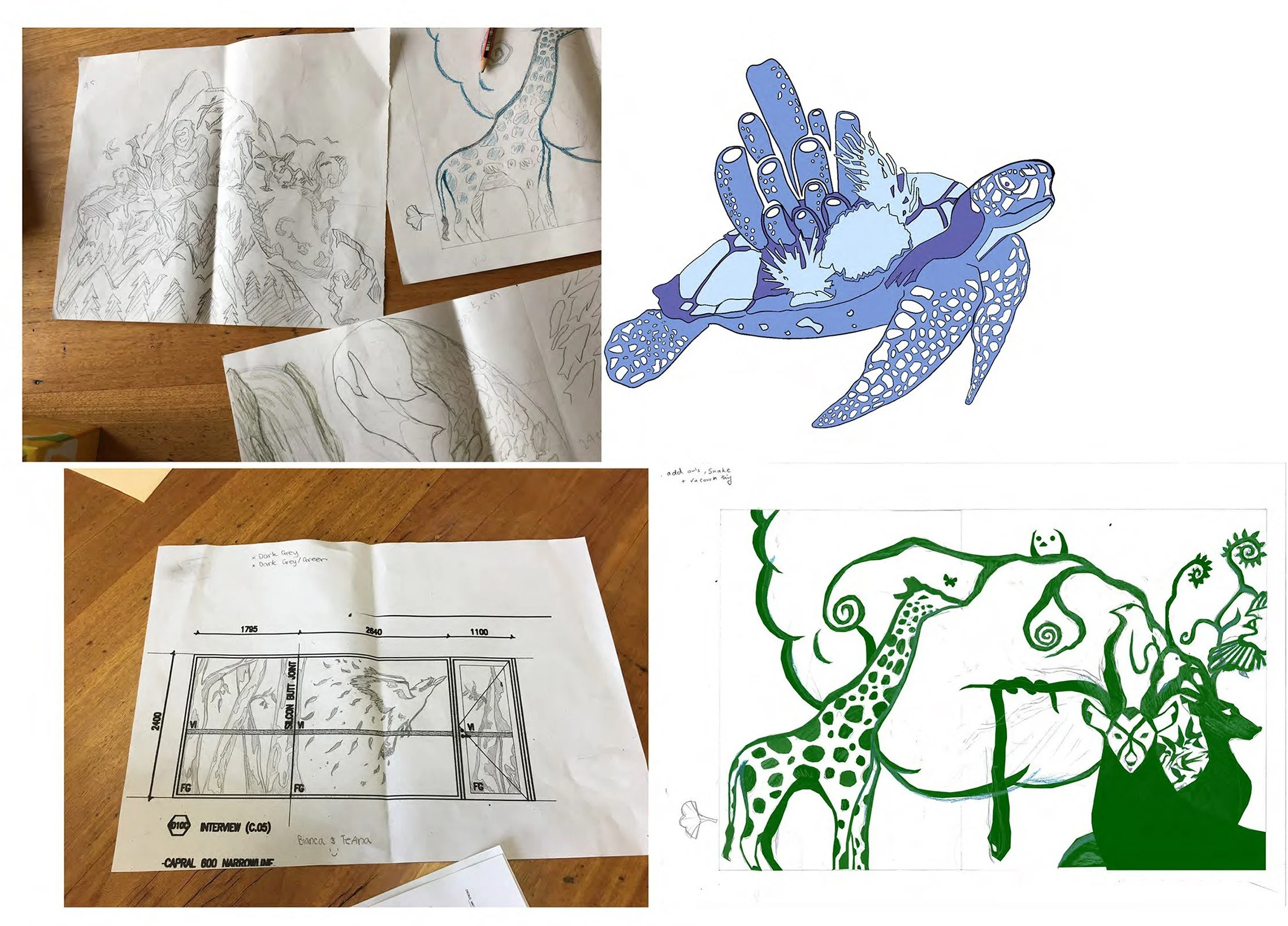
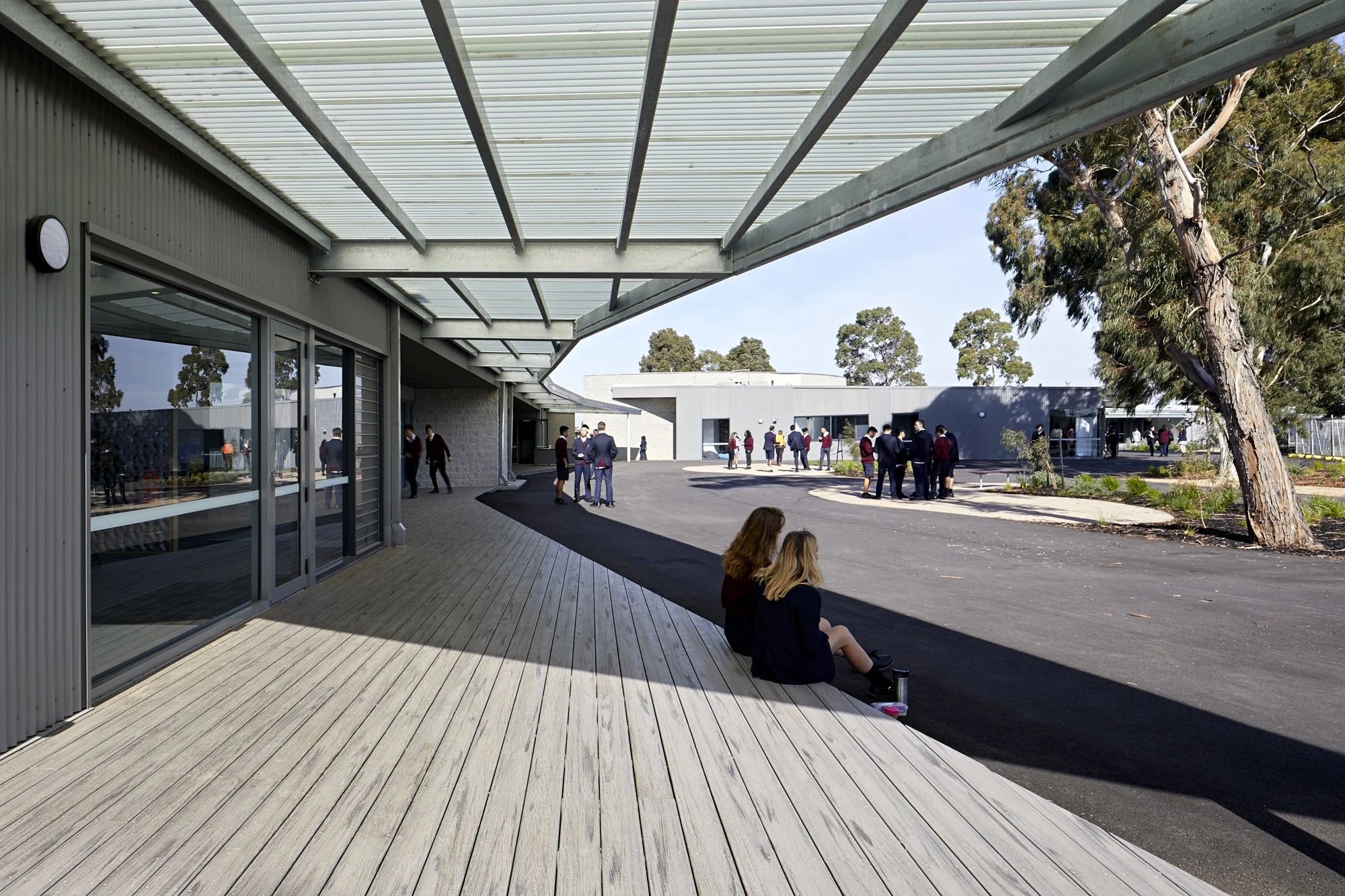
The learning spaces are flexible and transient for both students and teachers, with a sense of democratic ownership over the spaces encouraged through shared rather than personalised integrated storage, and window decals laser cut from digitised student artwork. All spaces feel considered and equally important, to avoid perpetuating hierarchies of privileging teachers over students, or one discipline of study over another. This approach has yielded a beautiful trio of curvilinear buildings set amongst groves of existing natives. Aligned with this, a transformed school culture has emerged that is more open, energetic, respectful and inclusive.
Acknowledgements
KDA Team
Robert Bienvenu, Mun Rosewarne
Photographer
Mark Farrelly, Tatjana Plitt
2019
Victorian School Design Awards: Best Secondary School- Finalist